
ORACLE Energy & Water
A Business Customer Engagement platform, shaped from vision to version 1.
Oracle's First Business Customer Engagement Platform
Allows businesses to manage their energy cost and use and make decisions based on insights and recommendations.
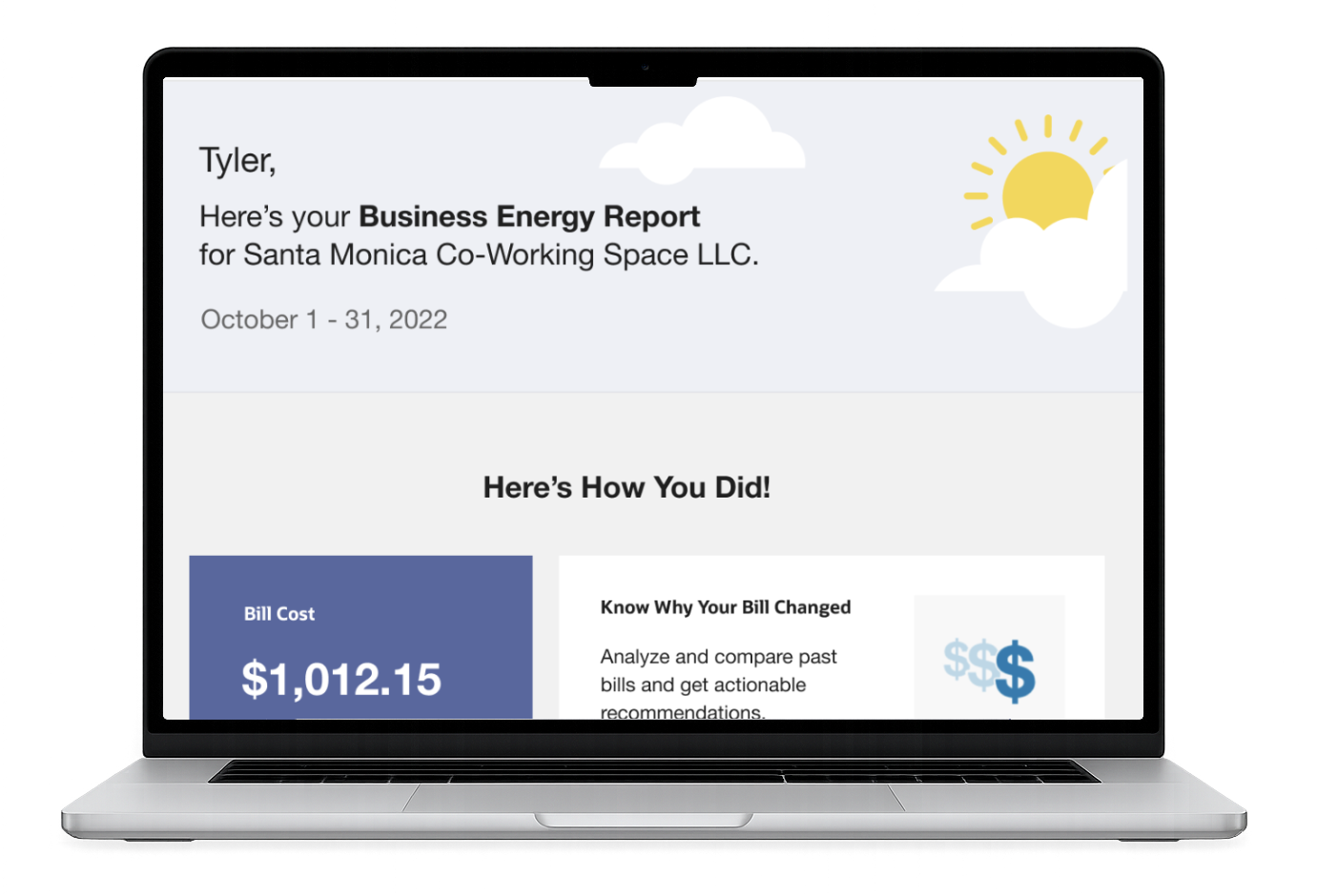
Role
As a Principal Product Designer, I owned the end-to-end experience from product vision through launch (0→1 Product). I had to get alignment from stakeholders as well as executives.
Project Overview
Oracle's commercial customer strategy depended on a third-party platform. When that partnership ended, the company needed to quickly establish its own offering while creating a foundation for long-term market leadership.
As the sole product designer, I partnered with product, engineering, data science, and behavioral scientists to define the experience from the ground up.
The Problem
Commercial utility portals answer the wrong question. They tell customers how much they used—but not why their bill changed or what to do next.
Business owners often pay a lot for bills (2-5x larger than residential). Figuring out how their business uses energy, what is driving changes, and how best to invest and optimize is difficult - analysis most business owners don't have time for.
Why It's Difficult
- Bills combine multiple variables (usage, demand, weather, rates)
- Businesses often manage multiple locations
- Utility terminology is unfamiliar to most customers
- Existing portals present data, but not explanations
The Ask
Design a business customer engagement solution that, in the short-term helps customers confidently select us, and in the long-term makes us a market leader and innovator.
- How do we leverage Oracle’s unique strengths and existing (or in-progress) solutions?
- How do Oracle’s different offerings best fit together to provide a compelling and cost-effective solution for utilities and end customers?
- What will convince customers to switch from using Uplight (Agentis) to Opower BCE?
- How might we differentiate our SMB energy saving offering in a competitive space?
- What is a compelling value proposition for busy businesses to engage?
- What is our stance on energy savings?
- What role does business type play in our final offering(s)?
- What does incorporating the "business type" look like?
Project Details
A successful product design strategy needed to address:
- Differentiated End-to-End Experience across email and web
- A point of view on how the product would look and work across web and email ("Multi-Channel" vs "Omni-Channel" experience)
- Borrow from what we have, when applicable to leverage existing residential product components to adapt it to business users when it makes sense
Duration: 4 months (Sept - December) with daily 1 hour working sessions.
Key Deliverables
The following was the end-to-end customer journey I had created along with support from 1 senior designer and the Product Management team (2 PMs).
My largest deliverable was journey map that highlighted key moments for Gary, a Medium Sized business owner's journey.
Leadership Check-Ins
Feedback was given at key points in the project during "Leadership Check-Ins". This was a meeting I suggested to ensure our progress was socialized, essential feedback from leaders was given and incorporated, and that we could pivot as needed.
The leadership team consisted of:
- Energy & Water Head of Design
- Director of Demand-Side Management (my manager)
- Product Management Dept. Director
Discovery
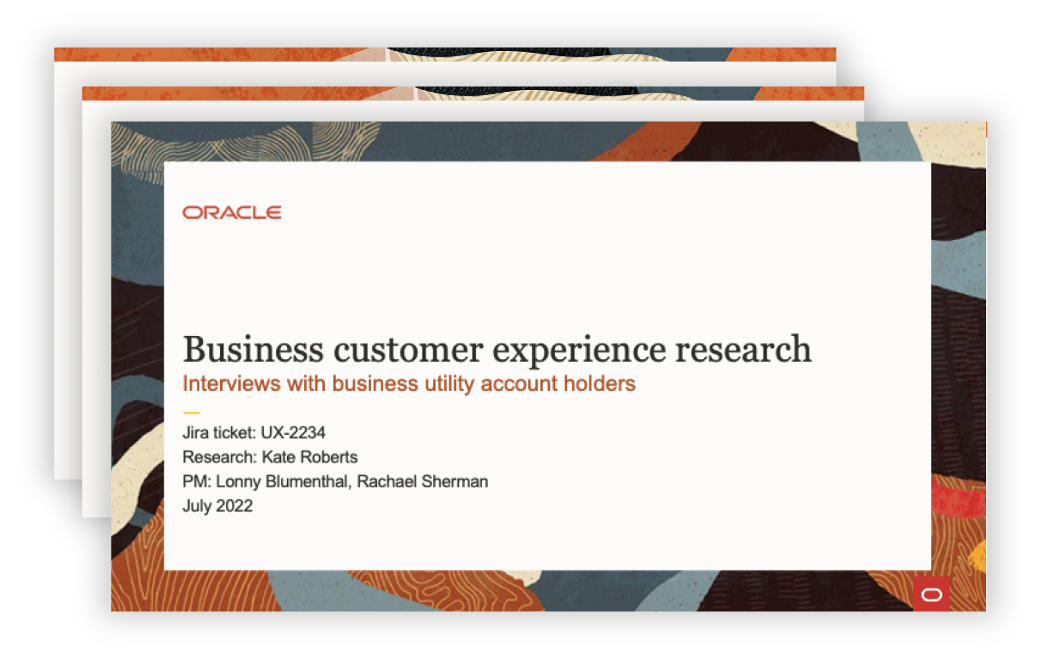
Leveraging prior research and secondary research
Thankfully on my first week at Oracle, I had heard our lead Researcher conducted seven 1-hour remote interviews with small to medium-sized business customers to generally understand their needs, wants, and challenges around energy management.
Along with some secondary research (from Accenture) and talking to stakeholders were valuable qualitative data points.
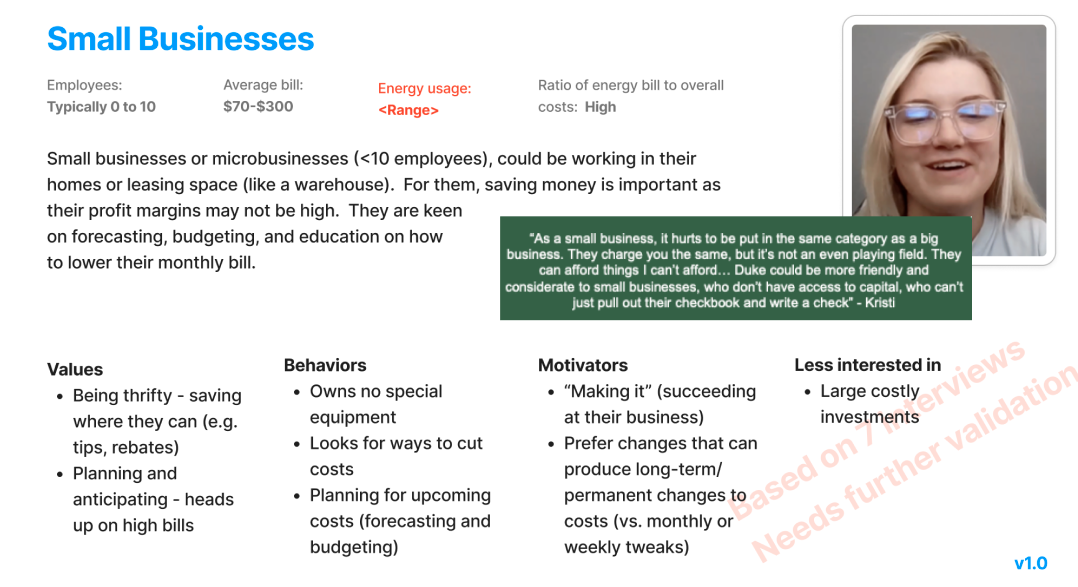
Separating "SMB" into personas
I was able to craft personas. Most online research and even our Utility customers refer to SMB as the small and medium businesses, and as such, see them as a group. However, looking at the research I helped decouple the idea of "SMB" (Small & Medium Business) being a monolithic group.
The research shows that the two segments are quite different in their needs and challenges and that any design needs to consider this. Two personas were then created, one for small business owner "Madee" and one fore medium business owner "Gary."
Crafting the Current State Journey
All the artifacts above helped to craft the "as-is" script or journey for the two SMB personas.
Defining the current state and grounding it in the needs of humans (small and medium business owners, Madee and Gary) helped create alignment, connection, and even excitement.
Our team was beginning to grasp the nuances of the design challenges we need to address moving forward.
User Goals
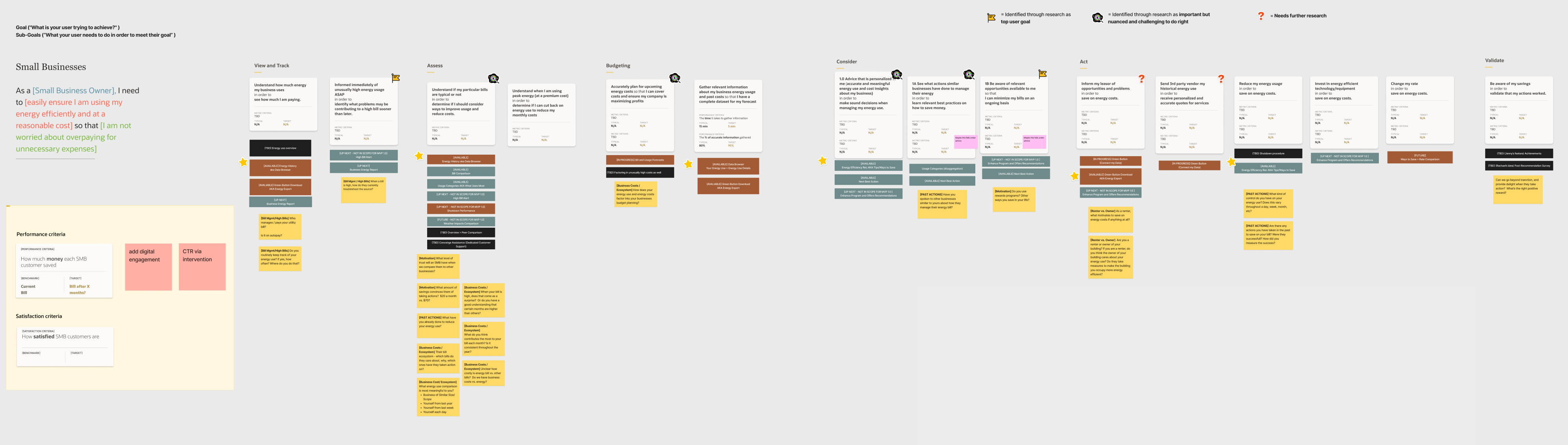
Arguably the most important part of the project was crafting and aligning with my team on Small and Medium Business goals and sub-goals.
Goal and sub-goals served as our north star with decision making and were extremely helpful when there were disagreements and tradeoffs during design (e.g. competing priorities with business goals or engineering constraints).
How were these crafted?
- PM and UX design spent a few working sessions to go over these, discuss, vote, and identify unknowns or gaps.
- Features were mapped under each goal.
- Goals and sub-goals were revisited and refined in later parts of the project as our team's understanding of end-users increased.
Definition Phase
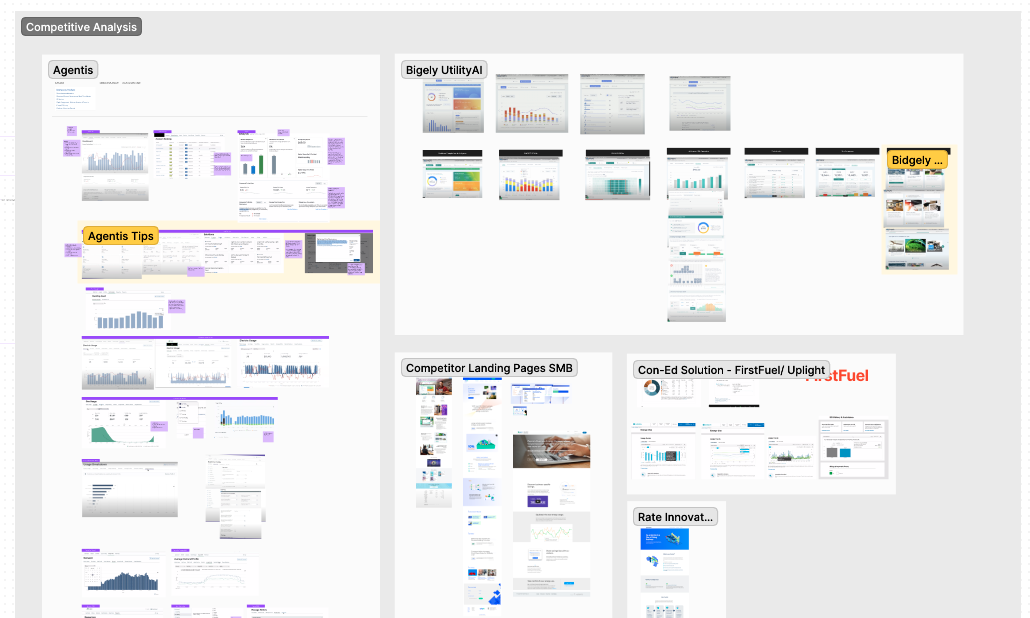
Understanding the competitive landscape
I spent considerable time taking screenshots of our competitors features in order to:
- Build awareness of their offering amongst the team
- Find opportunities to differentiate ourselves
- Evaluate their strengths and weaknesses
- Begin to think through what we may need in an MVP of the product
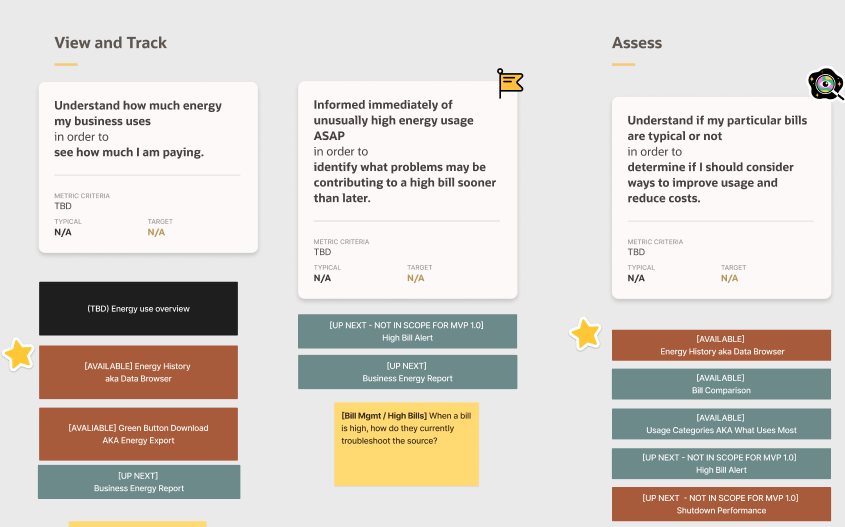
Roadmap Development: Aligning Features to Goals
Looking at our roadmap features and competitive landscape, I was able to map the roadmap to the user sub-goals to have a better sense of how features are supporting (or not) the end-to-end experience.
The team also discussed what business metrics may be important and brainstormed on potential research questions for the future.
Personalization Strategy
Understanding the user goals and business goals, we were still left with a fundamental challenge: most utilities don't have targeting data beyond a business' address, usage values and charges. Some utilities may have the business type, but can vary and the mapping could be incorrect
With minimal customer data to start with, how might we improve relevance in our product experience? What role does personalization play in improving relevance?
Our Hypothesis
- We believe a Business Profile (a survey) will be the best way to get information from businesses to help provide customers with more relevant insights and content (tip, rebates, programs, etc.). The survey will get us information we would not be able to deduce ourselves through data science or 3rd party data sources (both of which will need to be used in conjunction with the survey).
- The Hook Model could be a great design framework to engage users through email to web - with the eventual goal to have users trust the Utility enough to spend time and energy filling out their Business Profile.
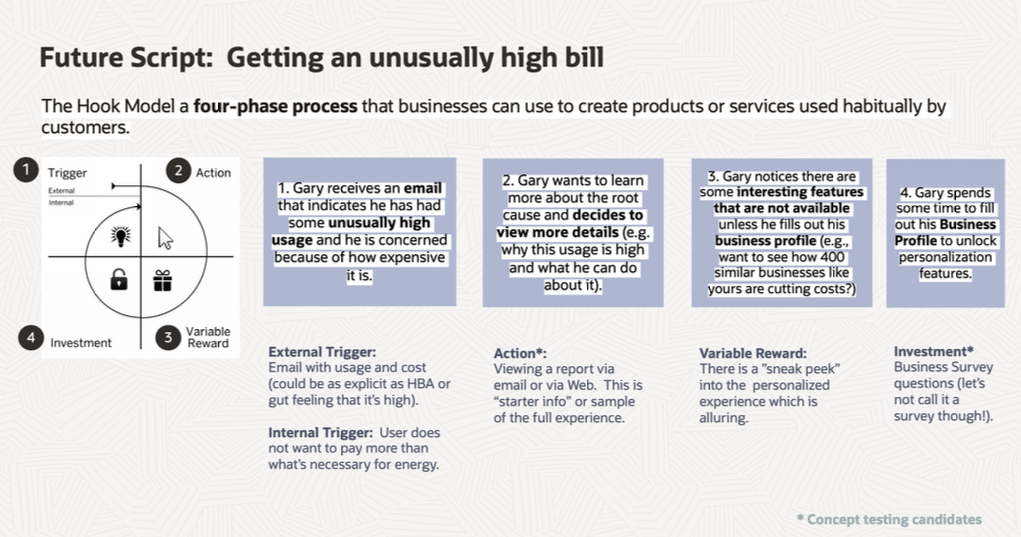
Through email communications, Gary receives just-in-time valuable information about unusually high usage at one of his properties. His concern to mitigate expenses is what drives him to take an action - investing into looking into more details on the web.
The more Gary trusts the insights and recommendations given to him, the more he is willing to invest in filling his Business Profile to receive more personalized content.
Synthesis
Exploring user flows
I would be lying if I said I had clean user flows. The reality is much messier. Originally, the PM team believed we had to use another product first. Then we worked on outlining how the Business Profile feature worked. Then the cadence of email communication.
In the end, the scope became simpler since we were focused on a "happy path" target state vision. Design would be focused on an email communication and how to get users to the web.
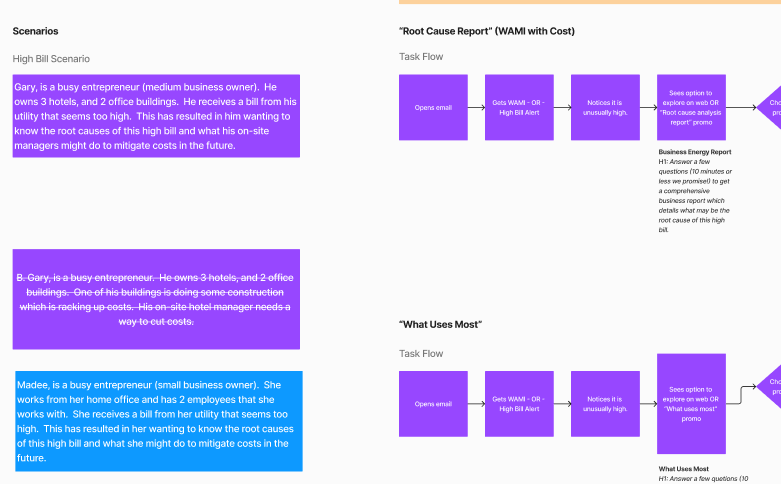
Notice the two scenarios for both small and medium business owners Gary and Madee.
These helped guide flow discussions with the PM team.
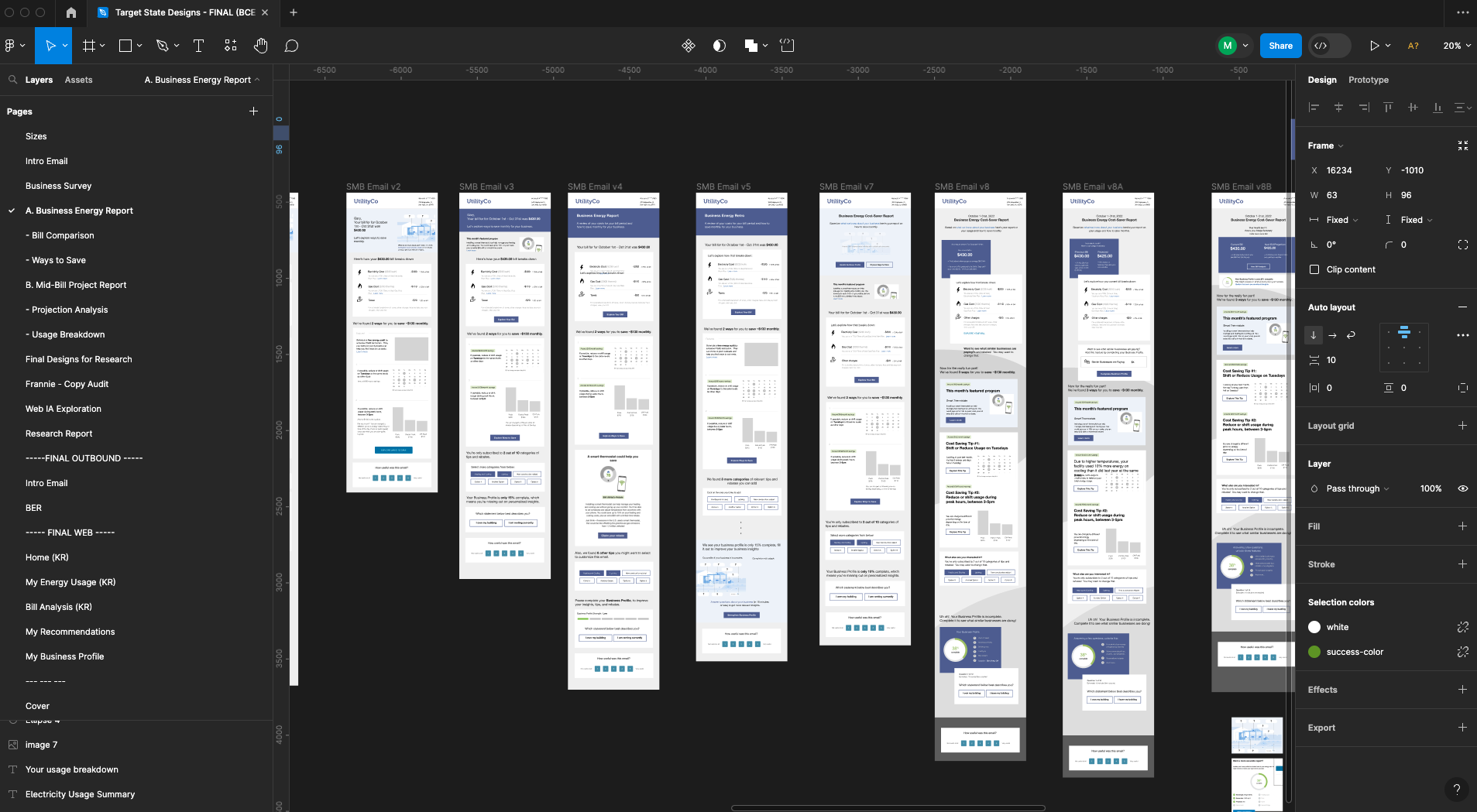
Illustrating the concepts in detail
After crafting a "future script" (or storyboard) of "Gary's Journey", it was clear what pieces of the design needed to be made.
With time as a constraint, we skipped traditional black and white wireframes and chose to design higher fidelity mockups to showcase the story. These would be used for an upcoming conference presentation as well as a presentation for socializing the design process I had followed during an All Hands meeting with 100+ attendees.
Target State Experience: Gary's Journey
Our key final deliverable was a future state journey that showcases how Gary, a medium size business owner manages his energy and navigates a high bill.
Get in touch
If a hard problem is sitting on your team,
I'd like to hear about it.